
Why Weight Loss Surgery Isn't the Easy Way Out
- May 22
- 3 min read
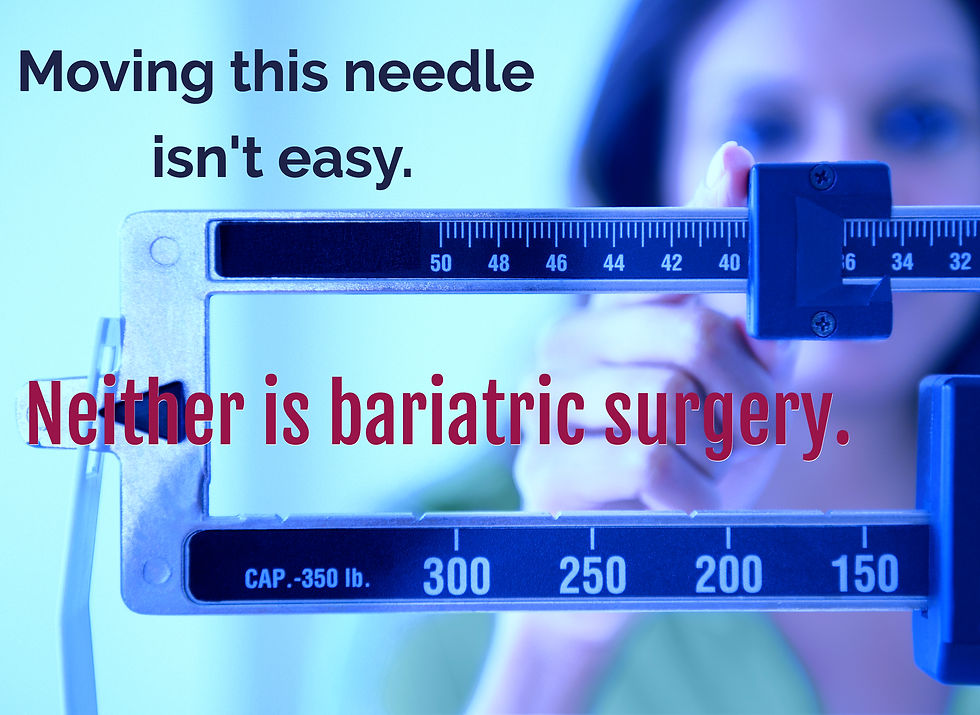
You've heard it before. “Weight loss surgery is taking the easy way out.” Not only is this one of medicine’s greatest misconceptions, its stigma influences individuals to shy away from bariatric surgery in Los Angeles- even if they qualify for a procedure.
Obesity Is a Disease, Not a Choice
Like any other stigma that exists in society, the fundamental misunderstanding about obesity is what creates the misconception. For example, a common belief still exists that individuals struggle with excess weight due to poor choices and lack of discipline. However, the World Obesity Federation and other leading medical institutions such as the National Library of Medicine classify obesity as a chronic disease.
In fact, the American Medical Association made this official over a decade ago, and a 2023 review in Frontiers in Public Health confirmed that classifying obesity as a disease is essential to reducing stigma and improving access to treatment, including surgery.
What Causes Obesity Other than Lifestyle?
There are several factors which contribute to obesity that aren’t as obvious as a lack of portion control. Environment contributes to obesity risk. For example, when people have schedules that are out of sync with their body’s natural clock such as shift workers, the inconsistent timing of their meals can be a risk factor for obesity.

Even from the womb, the risk of obesity can be influenced. A mother’s diet during pregnancy or exposure to certain chemicals can trigger epigenetic changes that affect a child’s metabolism for decades.
Hormones in the Gut
Although genetics and lifestyle choices play a role in developing obesity, so do the bacteria living in your gut. They affect how your body processes food and stores fat. Hormones like leptin and ghrelin, which control hunger and fullness, can become dysregulated, making it physically harder to feel satisfied after eating. Chronic stress raises cortisol levels, which drives fat storage and cravings for high-calorie foods. This is where GLP-1 medications come in by regulating the hormones that control appetite. Bariatric surgeries such as the gastric sleeve not only reduce food intake, they fundamentally change the digestive process to support metabolic health and weight loss.
With a combination of complex genetic, hormonal, metabolic, and environmental drivers that we also discussed here, obesity is more nuanced than simply a number on the scale. That being said, since there are so many contributing factors to an individual who develops obesity, there is no universal treatment approach. Since there is no one-size fits all treatment for obesity, it is important to keep an open mind.

The Consequences of the Bariatric Surgery Stigma
A 2024 study published in the Journal of Advanced Nursing found that bariatric surgery patients regularly face judgment from family, friends, and even healthcare providers. They are commonly told they took the "easy way" or "cheated" at weight loss. This stigma doesn't just sting emotionally. It can undermine a patient's confidence, reduce their support system, and make the post-surgical period more lonely.
Those who dismiss the noise from this pervasive stigma are experiencing a higher quality of life. A 2025 ASMBS study tracking nearly 5,800 patients found that self-esteem scores more than doubled within just one year of surgery. This number could be even higher if the stigma against weight loss surgery is neutralized. Not only would the number of patients with an increase in self-esteem grow, the number of candidates who qualify for bariatric surgery would undergo a procedure.
If you or a loved one are considering bariatric surgery but are hesitant about “taking the easy way out,” contact our office to schedule a consultation. Dr. Korman treats patients all throughout Los Angeles and Southern California on an individual basis.


Comments