
Americans 65 and Older are Quitting GLP-1s
- Feb 5
- 2 min read
Updated: Feb 9
GLP-1 medications like Ozempic, Wegovy, Mounjaro, and Zepbound might be the weight loss equivalent for the fountain of youth. Not only do the drugs reduce your appetite, patients see improved blood sugar levels, and lower cholesterol and blood pressure. These improved factors can even reduce the risk of heart attack and stroke. With all these benefits, one could assume adherence to these drugs would be long-term.
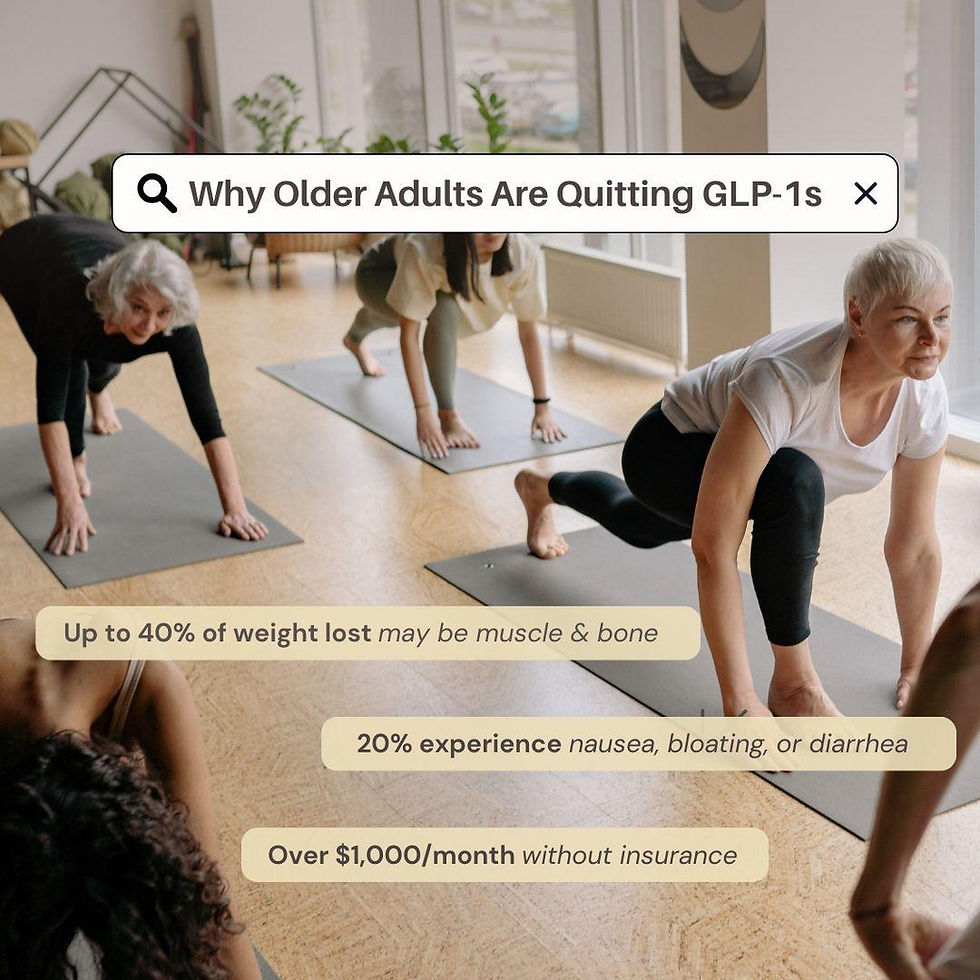
However, recent studies show a growing number of older adults stop using the medications within a year. In one study, 60% semaglutide users who were 65 and older with diabetes discontinued the drug within a year. In the same study, almost 50% of patients without diabetes discontinued the medications. In terms of restarting the medications, patients over 65 are 20-30% less likely to do so than younger patients.
Why the Discontinuation of GLP-1s?
Even though GLP-1 medications are highly effective for treating obesity and type 2 diabetes, there are several reasons why older adults discontinue using them within a year.
Unwanted side effects: 20% of patients experience gastrointestinal problems: nausea, sometimes vomiting, bloating, diarrhea. For some patients, these are mild and temporary, for others, they outweigh the benefit of weight loss.
The number on the scale is decreasing, but so are fitness levels: up to 40% of the weight loss comes from lean mass including muscle and bone. Since muscle loss already accelerates with age, this can lead to weakness, reduced mobility, falls, and fractures. Some older patients report feeling less strong and less capable, even as the number on the scale drops.
Managing expectations: Many patients are unaware that GLP-1 medications are typically long-term treatments. Stopping them often leads to weight re-gain and loss of metabolic improvements. Restarting therapy after weight cycling may be harder on the body and can increase the risk of functional decline.
Some of the discontinuation rate may be attributed to the shortages of 2022-2024.
A study by Cleveland Clinic found that nearly half of discontinuation occurred due to out of pocket costs or insurance issues. GLP-1 medications can cost over $1,000 per month without insurance coverage. While some Medicare Advantage plans temporarily cover them, coverage can be withdrawn with little warning. Policy changes may help. Medicare has capped out-of-pocket prescription costs starting in 2026, and drug prices are expected to drop further in 2027. There’s also growing momentum to classify obesity as a disease—rather than a personal failing—and expand Medicare coverage for anti-obesity medications.

In order to mitigate the effects of quitting the weight loss medications completely, there are possible solutions:
Instead of stopping the medication completely, implement maintenance doses that are spread out over time that are a lower dose.
Nutrition and Strength Training education: Understanding how much protein a patient needs to consume daily or how many times a week they should be hitting the weight room to maximize lean muscle and fat loss can impact the effectiveness of GLP-1s in the long-term. Dr. Korman and his staff provide this support for medical weight loss patients.
For more information on medical weight loss and surgical weight loss procedures such as the gastric sleeve, we encourage you to contact Dr. Korman’s office today.


Comments